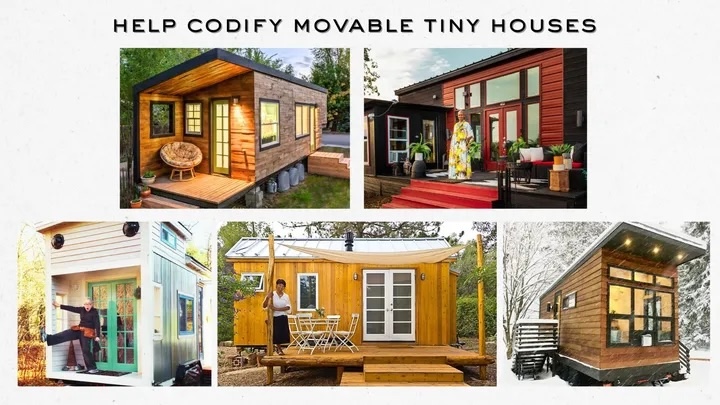
Where We Are Overall
Guest Post by Macy Miller
The proposed IRC code language for movable tiny houses did not pass at the ICC hearings in Cleveland last October. Since then, Martin Hammer, David Eisenberg, and I have been working steadily behind the scenes to determine whether there is any viable path to bring this (slightly modified) language forward again within the current code cycle.
It wasn’t clear that would be possible. Through continued refinement of the language, coordination with ICC staff, and renewed alignment across stakeholders, we now find ourselves with one final opportunity to advance tiny houses on wheels at the end of April. Not only that, we have been able to submit a second comment, which builds on the first, to incorporate prescriptive structural details. You can see each comment here [Comment #1, Comment #2]
The primary change of note is that the title went from ‘Movable Tiny House’ to ‘Relocatable Tiny House’. This is based on feedback in the room from many officials who want approval but said they would be obligated to reject anything that focuses on transportation. Relocatable is a term that has precedence in code language and we’ve gotten very positive feedback so far from the regulatory world.
Importantly, this won’t change the terms which we already use in real life, this is just code language and we have incorporated both ‘movable tiny house’ and ‘tiny house on wheels’ into the definition of a ‘relocatable tiny house’.
I believe the language is even stronger than what we brought to Cleveland, and early official feedback seems to agree. At this stage, the biggest hurdle is that the proposal will require a supermajority vote to pass, which makes broad, visible public support essential.
I’ve written a more detailed background post – including the history, current draft language, FAQs, and all relevant links – for anyone who wants to go deeper.
What needs to happen over the next three months leading up to the hearing
Now that the code language is complete, there are three parallel efforts underway:
1. ICC chapter outreach (this one is on me) There are roughly 120 ICC chapters nationwide, made up entirely of the voting body who will ultimately decide the fate of this proposal. Over the next several weeks, my time is largely dedicated to reaching out to chapters individually—answering questions, addressing concerns, and hopefully earning their support ahead of the April hearing.
2. Public outreach (help is appreciated) I’m coordinating a public education and outreach effort with two goals. First, gathering signatures of public support on the petition. These signatures carry significant weight when presented during our testimony. Bringing 20,000 signatures to the hearing would be very impactful.
Second, if we achieve a 2/3 vote in the room in April, the proposal moves to the broader online voting body. At that point, there will be a short window (about two weeks) where public engagement can make a really big difference – especially in the form of constituents emailing their local officials. This strategy is similar to what we used successfully for Appendix Q in 2016. To prepare for that moment, I’ve started a mailing list to collect contact information from people who are willing to help by emailing their officials when the time comes. (I’ll developed templates and instructions on how to find their officials as we get closer)
3. Fundraising (help is appreciated) Martin and David have contributed hundreds of hours, there are real structural engineering fees involved, and I’m hoping to ensure that co-proponents who fly in to testify aren’t left covering travel costs out of pocket. In 2016, financial support was largely from owner builders. This time, I’m hoping to engage tiny house businesses more directly, too. A successful outcome here meaningfully benefits the broader industry as much as the owner builders. I have started a GoFundMe.
While fundraising is very helpful, public participation is paramount
Passing this is going to take a collective effort.